Network of Bioinformatics, Technology & AI
Genomes read where
they are lived.
NBTA is a research network for bioinformatics and AI scientists, beginning across the Arab world and extending outward. It is built on a simple premise: populations should be studied by the researchers who belong to them, using reference data that actually includes them.
World Economic ForumRead our piece on genomic sovereigntyThe gap
The reference genome
was never neutral.
Twenty-two countries. More than 450 million people. A region carrying some of the most informative population genetics on earth, and almost none of it represented in the databases the rest of the field builds on.
Countries in the first regional network, before expansion to Africa and Southeast Asia.
People whose genetic diversity remains largely uncharacterised in reference datasets.
Comprehensive Arab genomics reference databases in existence. NBTA intends to build the first.
Computational infrastructure and bioinformatics expertise remain limited across most universities in the region.
Region-specific genomic and biological databases are insufficient for the questions researchers here need to ask.
Research communities are fragmented, with few working mechanisms for collaboration across borders.
Arab researchers are underrepresented in high-impact international genomics publications.
Existing centres concentrate on clinical or basic science, leaving modern AI and bioinformatics methods largely unapplied to regional datasets.
Research
Five pillars, worked in parallel.
The agenda is deliberately interconnected. Population genomics feeds precision medicine, method development serves both, and ethics is not a review stage at the end but a pillar with its own standing.
Applied Bioinformatics and AI
Computational methods, machine learning models, and AI pipelines for biological data: sequence analysis, structural biology, and multi-omics integration.
Arab Population Genomics
Characterising genetic diversity, disease predisposition, and population structure specific to Arab populations, and curating the first comprehensive reference database for them.
Precision Medicine for the Region
Improving diagnosis, treatment, and prevention for conditions that disproportionately affect Arab populations, including consanguinity-related disorders, Type 2 diabetes, and cardiovascular disease.
Agricultural and Environmental Genomics
Supporting food security and environmental sustainability through crop genomics, drought resistance research, and microbial ecology of arid environments.
Ethics and Moral Frameworks
Grounding research discoveries in the ethical values of the communities they come from, and holding open space for the free enquiry that regional scientific sovereignty depends on.
How projects start.
Members find each other from within the network and create a project team to conduct research on a particular project. There are two types of research projects.
Type 01
Organic collaboration
Organic collaboration among scientists who go forward with a project where the community offered a space to find people and brainstorm ideas and ask for advice.
Type 02
Board approved support
Projects are submitted to board for approval for support from Pan.bio platform and expertise.
Membership
Membership is individual or organisational.
Researchers join in their own name at one of two levels, senior or junior. Institutions join as organisations.
Individual
Senior members
Established researchers who join in their own name and can lead project teams within the network.
Individual
Junior members
Early-career researchers and postgraduates who join in their own name, with access to training and to senior members.
Organisational
Institutions and labs
Universities, research centres, and laboratories that join as a body and bring their researchers with them.
They join to do the science together.
Love of the field is the start. What keeps people is a team: like-minded researchers, complementary expertise, training, and a community that publishes from here.
A sense of pride and belonging among scientists who share the same questions, not a directory of names.
Complementary expertise, so a lab is not left waiting for a method or a collaborator it does not have.
Training on particular topics and skills, and room to keep learning the science as the work changes.
Quality research that can be published, including the papers that still count for promotion.
What the network provides.
The same four things, whether you join in your own name or as a lab.
Tools
Pan.bio's pipeline of tools.
Data
Access to databases the work actually needs.
Training
Capacity building on particular topics and skills.
People
A community of scientists, not a mailing list.
Roadmap
Three years, in sequence.
Each phase depends on the one before it. Infrastructure and pilot projects come first, because a regional network follows published work and demonstrated capability.
2026 / 2027
Establish network infrastructure: computing, staff, and governance. Launch two to three pilot research projects. Build an initial network of ten or more regional researcher partners. Establish a digital collaboration space and a research newsletter.
2027 / 2028
Publish five or more peer-reviewed articles in indexed journals. Run the first bioinformatics training workshop for Arab researchers. Onboard two postdoctoral researchers. Host the first regional symposium on Arab bioinformatics.
2028 / 2029
Publish ten or more papers, including at least two in top-tier journals. Extend the network to fifty or more researchers across ten or more countries. Launch an open-access Arab genomics data portal. Establish partnerships with EBI, NIH, and EMBL.
Leadership
Governed by a board,
hosted by Pan.bio.
NBTA is the Center of Excellence in Genomics, Bioinformatics and AI, operating under Pan.bio. Direction is set by a board drawn from the network's member institutions, so no single researcher or country holds the agenda.
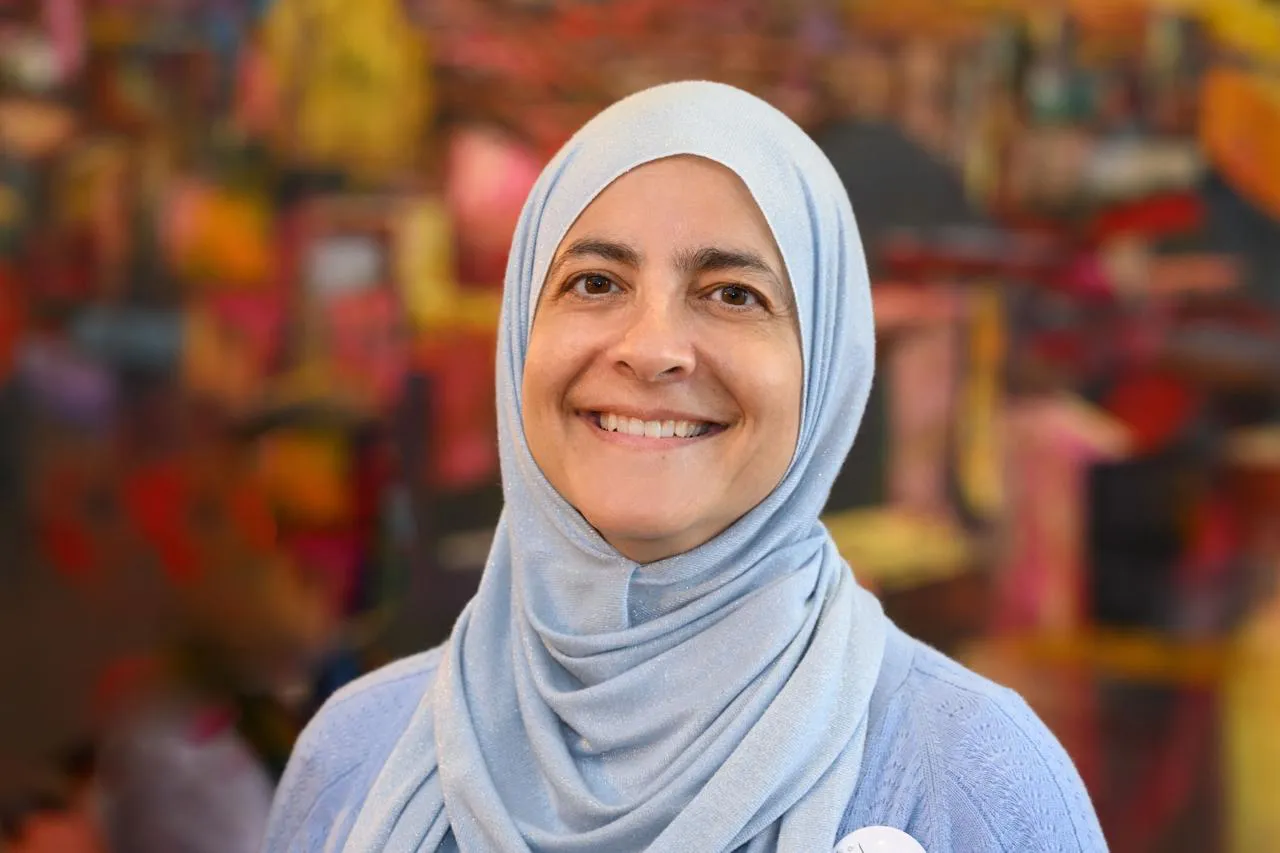
Founder and DirectorMolecular biology and genetics
Professor Rana Dajani
Professor Dajani is a molecular biologist and geneticist with extensive experience across research, science policy, and international collaboration. She is a recognised voice for science in the Arab world and a long-standing advocate for evidence-based policy, for women in science, and for academic cooperation that crosses borders.
Her leadership brings together scientific depth, a wide institutional network, and a clear view of what science can accomplish in this region when it is resourced and connected properly. She founded NBTA and sits on its board alongside colleagues from across the network.
The board
Board members are drawn from partner institutions across the region and hold responsibility for research priorities, membership, and the ethical framework the network works within.
In the media
Making the case in public.
Articles, interviews, and talks from the people behind NBTA, published elsewhere. Each one opens on the publisher's own site.
ArticleWorld Economic Forum
How we build genomic sovereignty in the Middle East and North Africa(opens in a new tab)
By Ahmad Jadallah and Rana Dajani
People from the region make up about 5% of humanity but only 1 in 600 participants in genome-wide association studies. The authors argue the gap is one of coordination, not talent, and propose NBTA, a scientist-led network supported by Pan.bio, as one way to connect the region's researchers and data.
Read on weforum.org
Contact
Work with the network.
NBTA is being built with researchers, not for them. If your work touches genomics, bioinformatics, AI methods, or the ethics of applying them regionally, tell us what you are working on. We read every submission and reply directly.
Direct reply
A coordinator reads every submission and replies personally.
Researcher-first
Built with scientists in the region, not as an outreach list.
Kept private
We only use your details to follow up on this interest.